Remarkable Effects and Unique Advantages of Traditional Chinese Medicine in Treating Adult-Onset Still's Disease (AOSD)
Remarkable Effects and Unique Advantages of Traditional Chinese Medicine in Treating Adult-Onset Still's Disease (AOSD)
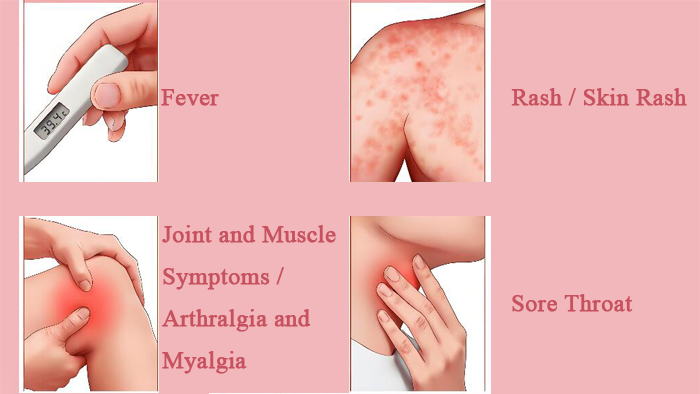
Adult-Onset Still's Disease (AOSD) is a rare autoinflammatory disease, primarily characterized by daily high fever, transient salmon-pink rash, and polyarthralgia. It commonly affects young people aged 16-35, and its etiology remains unclear. Currently, Western medicine primarily relies on nonsteroidal anti-inflammatory drugs (NSAIDs), glucocorticoids, and biologics such as IL-1/IL-6 inhibitors to control the condition. However, the side effects associated with long-term hormone use cannot be ignored—they may not only lead to common issues like infections and osteoporosis but can also, in rare cases, induce severe liver damage. Traditional Chinese Medicine (TCM) offers new treatment options for AOSD patients through holistic regulation and individualized therapy.
Remarkable Effects of TCM on Adult-Onset Still's Disease
Clinical practice has confirmed that TCM can improve AOSD conditions through multiple mechanisms:
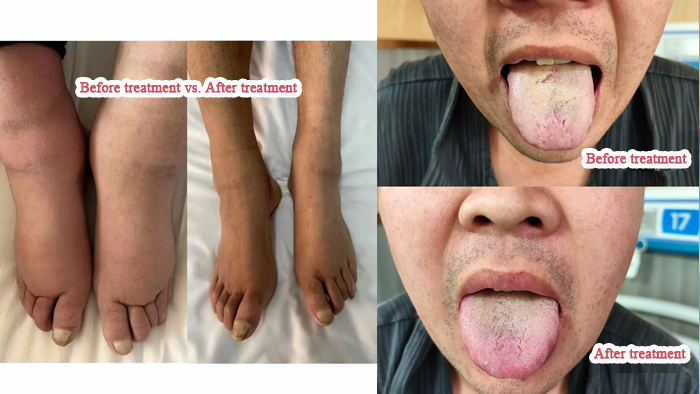
Controlling Core Symptoms: The latest case report shows that after three months of Bo's Abdominal Acupuncture treatment, the patient's core symptoms, including high fever, rash, arthralgia, and sore throat, completely disappeared, and laboratory test parameters returned to normal.
Improving Inflammatory Markers: After treatment, the patient's white blood cell count decreased from 14.96×10⁹/L to the normal range (6.86×10⁹/L), C-reactive protein dropped from 119.06 mg/L to 0.61 mg/L, erythrocyte sedimentation rate (ESR) fell from 84 mm/h to 8 mm/h, and ferritin levels also returned to normal.
Achieving Long-Term Stability: The patient successfully discontinued hormone use after receiving TCM treatment and showed no recurrence during a 3-year follow-up, achieving genuine disease remission.
Significant Effect of Syndrome Differentiation: TCM practitioners, using defense-qi-nutrient-blood syndrome differentiation, have achieved good results in treating AOSD with modified Baihu Tang combined with Qingying Tang, or modified Shengjiang San.
Unique Advantages of TCM
1.Aiding Hormone Reduction and Withdrawal, Minimizing Side Effects
Western medicine guidelines emphasize that "reducing glucocorticoid use to avoid side effects" is an important treatment goal. TCM holds unique value in this regard—in the aforementioned case, the patient tapered off prednisone by 0.5 tablets weekly during acupuncture treatment, ultimately discontinuing the medication completely without disease flare-up. This is particularly important for patients who are hormone-intolerant (e.g., those with hormone-induced liver injury).
2.Multi-Target Holistic Regulation
The pathogenesis of AOSD involves a "cytokine storm" and overactivation of the innate immune system. The multi-component nature of TCM allows for multi-target regulation of immune function, rather than blocking a single biochemical pathway. For instance, acupuncture stimulates specific abdominal points (such as Zhongwan, Xiawan, Qihai, Guanyuan, etc.), systematically regulating the body's state to achieve a "holistic regulation" effect.
3.Individualized Treatment Based on Syndrome Differentiation
The clinical manifestations of AOSD are complex and variable, and can be classified into three patterns: monophasic, polyphasic, and chronic articular types. TCM adopts different treatment strategies based on the disease stage and individual presentation—either using defense-qi-nutrient-blood syndrome differentiation or addressing patterns like Qi and Yin deficiency or pathogenic heat and stagnant Bi, achieving precise individualized treatment.
4.Avoiding Long-Term Medication Dependence
Western medicine treatment for AOSD often requires long-term maintenance, and the recurrence rate upon discontinuation is high. The aforementioned case demonstrates that after three months of systematic abdominal acupuncture treatment, the patient not only became asymptomatic but also maintained a recurrence-free state for up to three years without needing any further medication. This suggests that TCM may help patients break free from long-term medication dependence through its "root-treating" mechanism.
5.High Safety, No Concerns About Drug Interactions
TCM treatments, especially non-pharmacological therapies like acupuncture, have virtually no risk of drug interactions or organ toxicity. This advantage is particularly prominent for chronic diseases requiring long-term management.
Innovative Achievements and Clinical Applications
Our hospital's TCM medium-frequency therapy device is an innovative application of the "midnight-noon ebb-flow" theory from The Yellow Emperor's Inner Classic for applying topical therapy. Its characteristics include being "safe, painless, effective, with standardized acupoint prescriptions, standardized operation, and broad indications." By precisely measuring and locating abdominal points (such as Zhongwan, Xiawan, Qihai, Guanyuan, Qixue, Huaroumen, etc.), it achieves reproducible results. Unlike traditional acupuncture, TCM medium-frequency therapy does not pursue the "De Qi" sensation, leading to higher patient acceptance.
How Long Does It Take to See A Good Effect?
According to clinical observation, with systematic TCM treatment, significant improvement is typically seen within three months:
Early Manifestations: As treatment progresses, the patient's body temperature gradually stabilizes, joint pain lessens, and the rash subsides.
Mid-term Improvement: Laboratory parameters (white blood cells, C-reactive protein, ESR, ferritin, etc.) gradually return to normal.
Long-term Benefits: Successfully discontinuing hormones and other Western drugs, achieving long-term medication-free remission.
Why Choose Us?
Personalized Care: Our treatments are customized based on TCM syndrome differentiation and modern diagnostic tools.
Minimally Invasive: Avoid the risks and costs associated with recurrent or long-term medication use.
Global Accessibility: Multilingual medical teams and streamlined international patient services ensure seamless care.
For patients seeking alternatives to invasive procedures, our TCM-centered approach offers hope and proven results for managing rheumatic and autoimmune conditions like Adult-Onset Still's Disease.
Conclusion
Traditional Chinese Medicine treatment for Adult-Onset Still's Disease can not only effectively control core symptoms such as fever, rash, and joint pain but also help patients break free from hormone dependence, reduce medication side effects, and lower recurrence rates, truly achieving the goal of "treating both the root cause and the manifestations."
With the standardized development of topical therapy techniques and in-depth research on Chinese herbal medicine, TCM will provide more treatment options for AOSD patients, helping more individuals avoid recurrent flare-ups and the burden of long-term medication use.